1 min read
3 Things to Know About Solar Module Packaging
As solar manufacturing continues to evolve in the United States, so does solar packaging. UFP Packagingis a leading supporter of the thriving solar...
From manufacturing to retail, discover packaging solutions built for your industry's needs.

3 min read
Packaging is your product's first opportunity to make an impression. Whether it lives in a printed corrugated box, ships in a reusable engineered crate, or sits on a pallet headed across the globe, your packaging matters. In industrial markets, packaging must be functional and strategic because it protects your product during shipping and storage, supports operational efficiency, and influences customer perception.
However, striking the right balance can be challenging. Too much packaging drives waste and cost, while too little puts product integrity and brand reputation at risk. Prioritizing thoughtful engineering and design from the beginning will lead to solutions that are safer, stronger, more sustainable, and optimized for real-world supply chain conditions.
To develop effective custom packaging solutions, you must first consider your product’s needs. You need to address its composition, fragility, and the distribution method it will undergo. To adequately meet these components, the design, materials, and engineering must be carefully planned and considered to create an adequate solution.
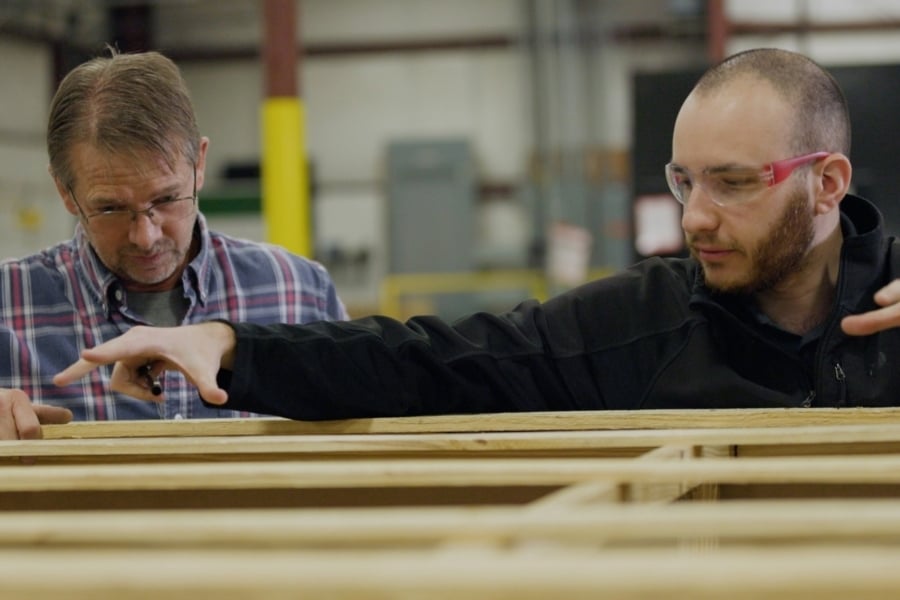
To create optimized customized packaging solutions, a qualified cross-functional team will help you understand your options. A team with the following roles will work seamlessly to understand your goals and deliver packaging solutions to meet your product and real-world scenarios.
It all starts with the account manager. Serving as the primary connection between the customer and design team, the account manager will capture your goals, pain points, and operational constraints. As your point person, they will communicate timelines, budgets, and performance priorities and provide feedback to the design team throughout development to maintain alignment with your wants and needs.
Packaging engineers are the driving force behind the operation. They analyze your product’s fragility, load paths, and handling conditions to perform structural calculations and validate the design. To ensure the solution is performance-ready in the real world, packaging engineers develop ISTA- or ASTM-based test plans. Sustainability is always top of mind, with a focus on reducing solution weight, cutting material use, reducing CO2 emissions from freight, and limiting material waste. Throughout the process, they also ensure the packaging is manufacturable and cost-efficient. Packaging engineers make sure the packaging solution performs in the field and makes sense on the production floor.
Industrial designers assist packaging engineers by turning technical solutions into practical, user-friendly applications. They focus on ergonomics, intuitive layouts, clear assembly instructions, and labeling, ensuring the design is easy to handle and implement on the production floor.
Custom packaging protects your products more effectively because it is engineered around their specific requirements. Optimized solutions reduce the risk of damage by improving handling stability and load security. When you tailor packaging to its contents, you minimize movement and better distribute forces, helping ensure the product arrives intact and performs as expected upon delivery.
Throughout the supply chain, your package will likely face drops, impacts, and vibration. Intentionally placed corrugated inserts or wood dunnage absorb shock better than generic filler.
Addressing moisture, temperature, and other environmental factors is also easier with custom-designed packaging. Insulation and protective packaging films prevent moisture from entering and help maintain consistent internal temperatures.
Your packaging design is evaluated not only for product optimization, but also for human interaction. Custom packaging can incorporate handles, grips, and intuitive features that improve ease of handling throughout the supply chain. Safety is a critical consideration, as ergonomically designed packaging helps protect your workforce and reduce the risk of injury.
Crating solutions like U-Loc 200 further enhance safety and usability with hand-applied and removed fasteners that eliminate the need for nail guns. This approach improves ergonomics during assembly, protects products from prying during unboxing, and supports reusability. This product is a great example of how a customized packaging solution can safeguard your product, support sustainability goals, and make assembly and disassembly safer and more efficient at every stage of the supply chain.
.jpg?width=900&height=600&name=ufp-packaging-industrial-designer%20(1).jpg)
U-Loc 200 is part of UFP Packaging's nail-gun-free crate line.
Custom industrial packaging supports sustainability goals by using only the material required for structural performance. By engineering out excess weight and eliminating unnecessary components, businesses can reduce raw material consumption, lower freight emissions, and minimize waste without compromising protection. This approach delivers measurable environmental impact while also driving cost efficiency across the supply chain.
Custom packaging enables labeling, tracking, and regulatory requirements to be engineered directly into the design from the start. Designers can strategically integrate features such as barcodes, QR codes, RFID tags, and required compliance markings to support traceability, inventory accuracy, and compliance with global shipping standards. Addressing these elements during the design phase reduces compliance risk, prevents costly re-labeling or repackaging, and ensures seamless movement through the supply chain.
Designing effective industrial packaging requires more than selecting materials or dimensions. It demands a deep understanding of your product, your operations, and the real-world conditions your supply chain presents. From structural performance and sustainability to ergonomics and compliance, thoughtful design transforms packaging into a strategic asset that supports protection, efficiency, and long-term value.
As an experienced custom packaging supplier, UFP Packaging brings engineering expertise, practical manufacturing insight, and collaborative problem-solving to every project. If you’re evaluating your current packaging or planning for future growth, connecting with our experienced team is the first step toward a solution tailored to your needs.
1 min read
As solar manufacturing continues to evolve in the United States, so does solar packaging. UFP Packagingis a leading supporter of the thriving solar...

1 min read
With more than 25 years of experience, UFP Packaging stands out as an industry leader in the ever-evolving landscape of sustainable solutions. As a...

1 min read
When moving your products from point A to point B, product packaging plays a crucial role that often goes unnoticed. It involves more than just...