1 min read
New or Recycled Pallets: Which is Right for Your Warehouse?
Pallets are essential components in commercial and industrial operations. They are used daily to easily transport goods such as building materials,...
From manufacturing to retail, discover packaging solutions built for your industry's needs.

2 min read
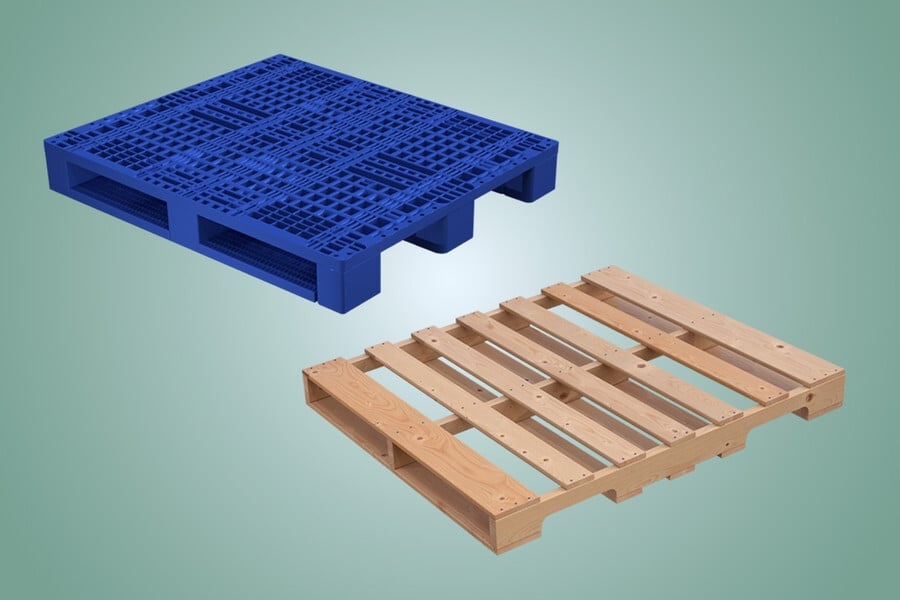
Over 90% of U.S. products travel on a pallet at some point in their supply chain. That means choosing the right pallet material is one of the key decisions a company makes. Choosing the wrong one could result in overpaying or product loss. But what differentiates wooden pallets from plastic pallets?
Plastic pallet cost is generally higher up front, but plastic pallets usually last longer if they aren’t damaged during use. Wooden pallets offer upfront savings, but if you plan to reuse them, you may need to budget for repairs when considering overall cost. Wooden pallet prices can also vary based on factors such as pallet size, design, lumber grade, and market conditions.
The most important factor in selecting the right pallet material is whether it can withstand the demands of your intended use. Understanding the different types of pallets and how they perform in your specific application can help you choose the right option.
Wood offers greater natural stiffness, while plastic can be engineered to support higher static loads. But the best pallet for your product isn’t simply the one that holds the most weight.
A well-designed pallet is built to your specifications. If you fall in either extreme, you get an overdesigned pallet that wastes money or an underdesigned pallet that may not adequately protect your product.
UFP Packaging's design experts sit down with you to understand your specific needs and create or match a complete unit load system that minimizes material use and reduces cost. For demanding applications, heavy-duty wooden pallets can provide the strength and durability needed to support heavier loads.
Driven by rising fuel costs, freight has recently surged to become the leading cost driver in the current manufacturing market. When fuel costs rise, everything is impacted. Wooden pallets generally weigh more than plastic alternatives, but since plastic is made from fossil fuel byproducts, the impact compounds on the delivered price.
Thanks to their customization options, recyclability, and ruggedness, wooden pallets work best for most general uses. Still, plastic pallets can be useful for supply chains that require complete moisture and pest resistance.
When comparing plastic vs wooden pallets, it’s important to consider more than the material itself. Your shipping environment, load requirements, handling practices, and supply chain can all affect which pallet is the better fit.
Climate concerns and growing government environmental initiatives have made sustainability a top-of-mind priority for businesses and consumers alike. Separating facts from greenwashing speculation can be tough. The key is to focus on real-world implementation.
Wooden pallets are made from 100% recyclable materials, and studies from Virginia Tech and the USDA Forest Service showed that, thanks to a mature, decentralized recycling ecosystem, 95% of wooden pallets are recycled, repaired, or reused.
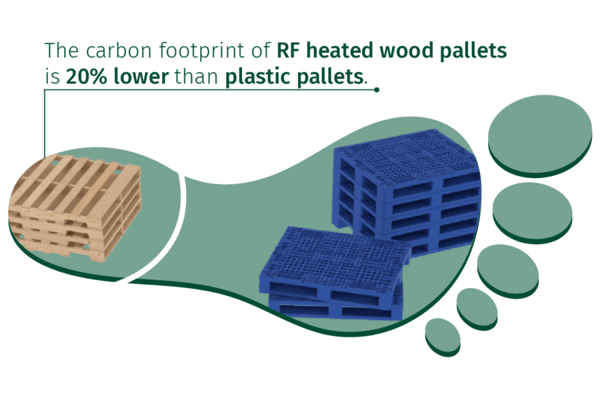
Plastic pallet producers often make similar sustainability claims, but in practice, plastic pallet recycling is almost entirely reliant on closed-loop ecosystems. A lack of industry-wide data transparency makes it critical that prospective customers should not conflate plastic recyclability or reusability claims with real-world recycling metrics.
A 2020 report in the Journal of Industrial Ecology found that, within the grocery industry, “Wooden pallets with conventional and RF heating incur an overall carbon footprint that is 71.8% and 80.3% lower, respectively, than plastic pallets during their life cycle.”
Wood’s superior repairability compounds this carbon gap. A broken stringer on a wooden pallet can be replaced cheaply and efficiently and returned to circulation, while plastic pallets, once damaged, cannot be repaired and exit the supply chain to be recycled or discarded.
If both pallets do end up in a landfill, the wood pallet biodegrades over a few decades into its natural parts. In contrast, plastic pallets take around 400 years to biodegrade, but they more often fragment into microplastics before they even have the chance.
The pallet you choose is the foundation of your supply chain. UFP Packaging, the nation’s largest wooden pallet company, combines cutting-edge technology, hands-on customer service, and a nationwide manufacturing network to pair you with the perfect pallet.
Contact UFP Packaging today to start leveraging expert guidance and unparalleled industry knowledge for a customized pallet solution you can trust.
1 min read
Pallets are essential components in commercial and industrial operations. They are used daily to easily transport goods such as building materials,...
1 min read
Many people use the terms interchangeably, but there is a significant difference between skids and pallets, and knowing the difference can ensure you...
1 min read
When selecting pallets for your shipping needs, understanding the full spectrum of options available is crucial for making an informed decision....