
1 min read
The Essential Guide to Heat-Treated Pallets vs Non-Heat-Treated Pallets
When selecting pallets for your shipping needs, understanding the full spectrum of options available is crucial for making an informed decision....
From manufacturing to retail, discover packaging solutions built for your industry's needs.

2 min read
.jpg)
ISPM-15 is an acronym for International Standards for Phytosanitary Measures No. 15. This measure is a global regulation created by the International Plant Protection Convention (IPPC) to prevent the spread of pests and diseases through wood packaging materials. Untreated wood can contain insects and diseases that can harm agriculture and forestry in foreign environments. ISPM-15 ensures that pallets, crates, and other wood packaging used in international shipping are adequately treated and traceable.
ISPM-15 was first adopted in 2002 and is now enforced by more than 160 countries, including the world's largest importers and exporters such as the United States, China, India, and the European Union. While most compliant countries implemented the measure in the mid-2000s, some are still adopting it, like Afghanistan in 2020, demonstrating the regulation's global reach.
ISPM-15 compliance is mandatory for every business participating in global trade. Wood packaging that doesn't meet the standard can lead to immediate consequences, including delays at customs, costly fines, rejected shipments, and even cargo destruction.
The penalty is worse if non-compliant wood introduces an invasive species. In that scenario, companies may face investigations, trade restrictions, and long-term damage to their brand reputation, not to mention the potential harm to the local ecosystem.
Compliance not only allows you to ship products across borders but also protects your business, your supply chain partners, and the global environment.
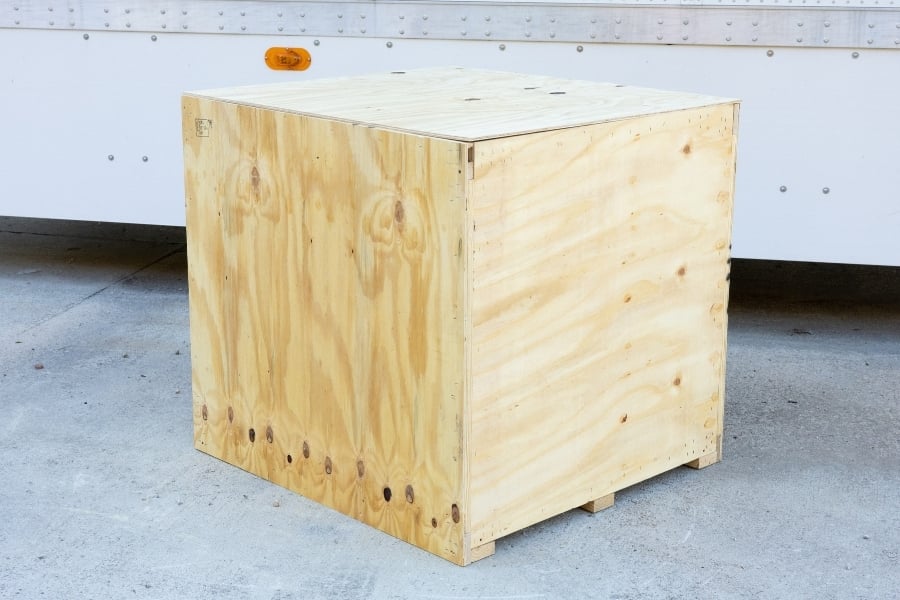
An ISPM-15 certified lift van from UFP Packaging
ISPM-15 applies to all solid wood packaging thicker than 6 mm. It must be debarked, treated, and clearly marked. Acceptable treatments include heat treatment (HT) or methyl bromide fumigation (MB), with an accredited agency verifying the process.
Although ISPM-15 treatment and general heat treatment utilize the same heat exposure (56 °C for 30 minutes), ISPM-15 requires additional layers of control, including strict bark requirements, a certified and traceable stamp, and formal documentation maintained by the treatment provider and manufacturing facility. This level of oversight ensures that treated materials meet international standards and are safe to introduce into foreign ecosystems.
ISPM-15 packaging bears a certification stamp, allowing traceability for inspectors at ports of entry. While the format is standardized globally, the content of each marking is unique.
The stamp includes:
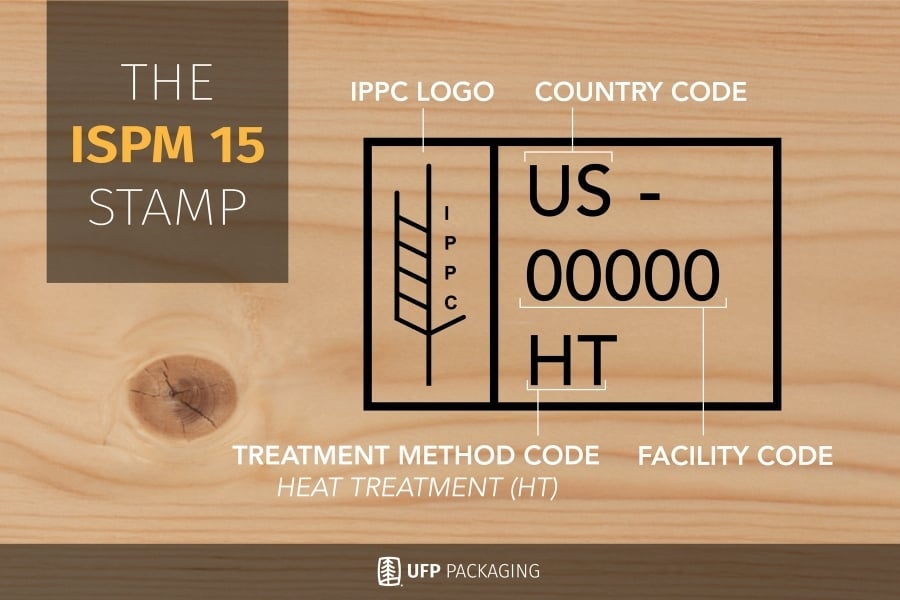
Because this mark serves as proof of compliance, it must be applied clearly and permanently. Hand-drawn or altered markings are not accepted and may result in automatic rejection at customs.
Selecting the right supplier is crucial to avoiding compliance issues, especially for businesses shipping high-value products or operating on tight delivery schedules. A reputable ISPM-15 certified supplier will be transparent about its credentials and provide necessary documentation to verify them.
Before partnering with a supplier, ensure:
The last update to the ISPM-15 standard occurred in 2013. While the IPPC periodically reviews all phytosanitary measures, there is currently no indication of upcoming changes to ISPM-15 for 2026. However, as global trade and ecological risks continue to evolve, staying informed by the IPPC and industry partners remains essential.
ISPM-15 is a foundational requirement for international shipping. Properly treated and clearly marked wood packaging helps protect ecosystems, reduce trade disruptions, and ensure smooth customs clearance. For businesses moving products across borders, partnering with a trusted ISPM-15 certified supplier like UFP Packaging is one of the most effective ways to safeguard shipments and maintain global compliance.
Want to receive all of the latest packaging news and insights?
1 min read
When selecting pallets for your shipping needs, understanding the full spectrum of options available is crucial for making an informed decision....
1 min read
Many people use the terms interchangeably, but there is a significant difference between skids and pallets, and knowing the difference can ensure you...

1 min read
To ship glass products with minimal to no damage, a company must be aware of potential hurdles and tasks at every stage of the supply chain....